
Why Hands-On Learning Experiences Matter
- Mara Lutz
- May 5
- 2 min read

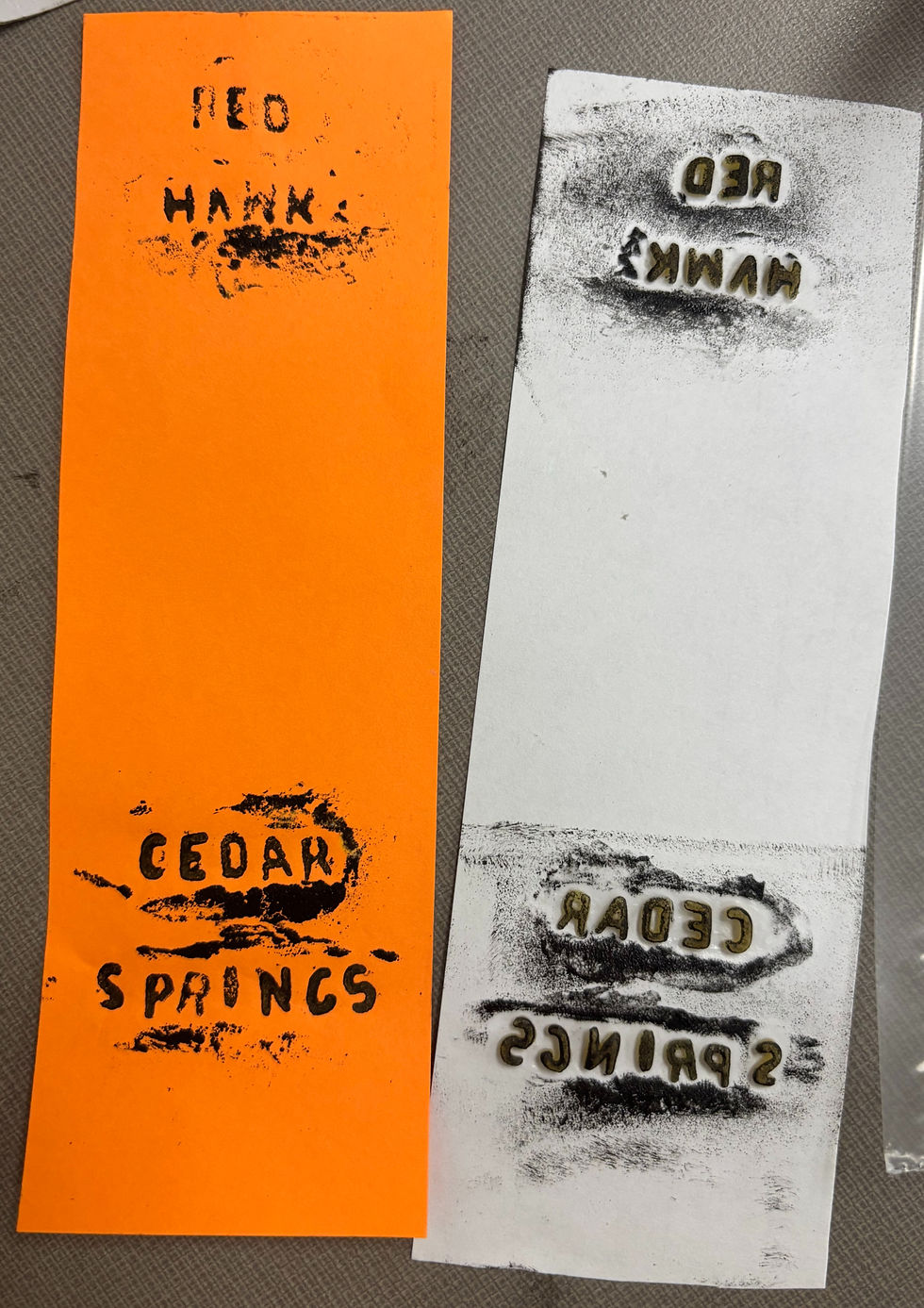
One of the biggest things I’ve learned in my teaching so far is that students don’t fully understand content until they can experience it. Hands-on extensions are not just “fun extras.” They are often the moments where learning actually sticks.
In my classroom, I’ve intentionally built in opportunities for students to connect their learning to something tangible, especially during our CKLA units. For example, during our Reformation unit, students created their own “printing press” bookmarks. Using pasta letters as movable type, they arranged words, inked their designs, and printed multiple copies. What could have been a simple reading about the printing press instead became something they felt and understood. Students quickly realized the importance of spacing, alignment, and repetition, and they were able to connect those challenges back to the historical significance of the printing press.
Similarly, during our Renaissance unit, I had students create their own “Mona Lisa” self-portraits on the underside of their desks, inspired by Michelangelo’s work on the Sistine Chapel ceiling.
Beyond being a memorable experience, this activity gave students a small glimpse into the physical challenge and persistence required of artists during that time. It created empathy and deeper understanding in a way that reading alone could not.
What stands out to me in both of these examples is the level of engagement and retention. Students remembered the content because they had done something with it. They were more willing to discuss, make connections, and ask questions because the learning felt real.
Beyond content understanding, these types of activities also build important skills. Hands-on extensions naturally support fine motor development, problem-solving, and perseverance. When students are working with materials, adjusting their approach, and figuring out what works, they are practicing skills that extend far beyond a single lesson.
I’ve also seen this through my experience teaching pottery at Tripp Lake Camp. Working with clay requires patience, control, and the ability to adjust when something doesn’t go as planned. Students learn quickly that they need to problem solve in the moment, whether that means reshaping, rebuilding, or starting over. Those same skills transfer directly into the classroom, where students are asked to revise writing, rethink strategies, or approach challenges in new ways.
Additionally, incorporating materials from nature and multimedia into learning can deepen students’ understanding of patterns, design, and structure. Whether students are exploring patterns in natural objects or using different textures and materials in their work, they are engaging in a kind of thinking that is both creative and analytical.
Overall, hands-on learning extensions create opportunities for students to engage more deeply, think more critically, and build skills that support their growth as learners. These experiences help bridge the gap between abstract concepts and real understanding, making learning more meaningful and lasting.
For me, it’s a reminder that some of the most impactful learning doesn’t happen through worksheets or lectures, but through experiences that allow students to explore, create, and make sense of the world around them.